
News » tips
-
How to Pop a Wheelie on a Motorcycle
How to Pop a Wheelie on a Motorcycle by KingsMotorcycleFairings.com

You know how to ride a motorcycle, but do you know how to pop a wheelie? A wheelie is one of the most famous bike stunts to execute for riders and for spectators to witness. To some riders, performing stunts on a motorcycle can be extremely intimidating (which it should be, since they can be dangerous). However, with proper guidance and control you can learn how to perfect the skill of a wheelie over time in a safe way. Now, there are a number of different variations and techniques to performing a wheelie, so to start, our team at Kings Motorcycle Fairings highly recommends learning how to first master the most basic, “power wheelie”!
Before you start
Motorcycle stunts, including the power wheelie, can be very dangerous, so we highly recommend learning this stunt only if you are already an advanced or experienced motorcycle rider and by doing so in a secluded and safe area. We also want to emphasize the importance of wearing a motorcycle helmet & protective gear at all times when riding, but especially when learning a new skill on your sport bike. In addition to the regular protective gear you consistly wear on the street, it certainly wouldn't hurt to be extra precautious by adding a little extra gear (such as knee pads, elbow pads and even ankle pads). Just like learning to ride a bicycle for the first time as a kid, it is likely that you will be falling frequently before you get the hang of it.
Step 1
Put it in 1st gear! Power wheelies are much easier when starting off in first gear, it's all about using acceleration to assist the bike in pulling the front wheel upward. The main objective to learning how to perform a wheelie is finding the right speed. We recommend starting the learning process by using speeds no higher than 10-15 mph. Going too slow can result in not having enough force to pull your front wheel upward. Going too fast can result in loss of control and can quickly put you in an unsafe situation. The key is to find a constant speed in-between 10-15 mph that will allow you to successfully find your balance point. Once you have found a good speed, you are ready to take on step 2!
Step 2
When you are ready, drop your speed and then open up the throttle and accelerate! This will help give you more power and a kick when you hit the gas. As you are doing this, pull the front wheel of your bike upward. If you feel as if you are going too far back, slightly hit the back brake to prevent yourself from flipping backwards. When you hit the rear brake, keep in mind that this action will cause your front wheel to come back down, so it's very important to land your front wheel as straight as possible. If your front wheel does not land straight or you land too suddenly, it can cause your bike to shake on impact resulting in a crash and possibly injuries.
Step 3
This step is about maintaining your balance during the power wheelie. When your front wheel is in the air it is important to find your balance point in order to be in the wheelie for a longer period of time. Lean back on the rear side of the bike, making sure the balance point of you and your bike is in the center. Pro Tip: Any sudden tipping forward or backward can interrupt your point of balance and result in the bike tipping over and damaging your motorcycle fairings (breathe & remain calm).
Step 4
When you are ready to end the wheelie, use your rear brake (like we mentioned earlier) to bring the front end of your sport bike back down to the pavement. Again, keep in mind that you will want to hit the brake slowly to ease your way back down. When you hit the brake too hard it can cause you to lose control resulting in you and your bike falling over. Pro Tip: You can slightly increase your throttle as the front end is coming down to help balance out your movements.
Lastly, motorcycle wheelies are an extremely fun but dangerous aspect of motorcycle riding. It is very important that you remember to be extremely aware of any other vehicles on the road and be personally safe by wearing your motorcycle helmet & protective gear. Kings highly recommends that you always practice in a secluded area free from other vehicles!
The team here at KingsMotorcycleFairings.com hope that you found this article helpful. If you have extra time, we’d love for you to visit our online store for the largest selection of quality Motorcycle Fairing Kits, Helmets, Gear & Accessories!
-
6 Tips For Riding Your Motorcycle In The Rain
6 Tips For Riding Your Motorcycle In The Rain by KingsMotorcycleFairings.com

If there’s one thing all motorcyclists have in common, it’s our pure love and passion for riding. Sometimes, this passion convinces us to want to ride so badly, that we’re willing to drive in subpar conditions, such as in the rain. If you’re guilty of wanting to ride despite poor weather or you simply find yourself caught in an unexpected rainfall, we want to help ensure you remain safe by providing you with a few tips.
Our team here at KingsMotorcycleFairings.com has compiled a list of 6 tips for you below for the next time you and your motorcycle are cruising on wet, slick and dangerous roads!
- 1.) Keep calm and avoid distractions
It’s always important to avoid distractions when riding on your bike, especially when the weather is not on your side. Remember to stay hyper focused by keeping your eyes on the road while staying calm and present.
- 2.) Avoid any sudden movements
This one goes along with keeping calm. If you're too tense and riding your bike with a death grip, the likelihood of any movement you make will be overly exaggerated, thus making it more dangerous for you the rider. Also avoid sudden acceleration, braking and swerving to help keep control of your bike at all times.
- 3.) Ride slowly
We know riding at slower speeds on your bike is not ideal or fun, however rain (regardless of intensity) will significantly reduce visibility for you and others on the road. Riding slowly and staying in your optimal lane will help increase awareness to other vehicles by allowing them to know where you are on the road and to allow you more space and reaction time.
- 4.) Stay away from puddles
Avoid puddles like the plague! They might look fun and maybe a little tempting to make a splash in, however puddles often equal potholes and potholes often equal an accident, a damaged motorcycle and personal injury. If a puddle is visible, give yourself enough lead time to pick a line that avoids the puddle entirely. If a puddle isn’t noticed until the last minute, calmly decelerate instead of swerving and slowly drive through the puddle to help decrease your odds of any rim damage or any accidental crashes.
- 5.) Turn those headlights on
When it comes to the rain, visibility can be dangerously low. That's why it is very important to ensure your headlights are fully on for increased visibility for not only yourself, but in addition to allowing the surrounding vehicles to know your whereabouts on the road.
- 6.) Wear your gear
We encourage all riders and passengers to be fully geared up for maximum protection regardless of whether it's a hot, sunny day or a cold, rainy evening. Helmets, jackets, boots, gloves and any other protective gear is always worth wearing!

Please keep these tips top of mind, so you’re always prepared for riding in any weather condition. Remain calm, be confident, stay safe and enjoy your ride.
The team here at KingsMotorcycleFairings.com hope that you found this article helpful. If you have extra time, we’d love for you to visit our online store for the largest selection of Motorcycle Fairing Kits, Helmets, Gear & Accessories!

-
What Is The Purpose Of Motorcycle Fairings?
What Is The Purpose Of Motorcycle Fairings? Whether you are riding a Honda, Ducati, Kawasaki, BMW, Yamaha, Triumph, Aprilia or a Suzuki motorcycle, fairings can in fact make a significant difference in how your bike will perform and look. -
How Often Should I Change My Motorcycle Oil?
How Often Should I Change My Motorcycle Oil? By KingsMotorcycleFairings.com
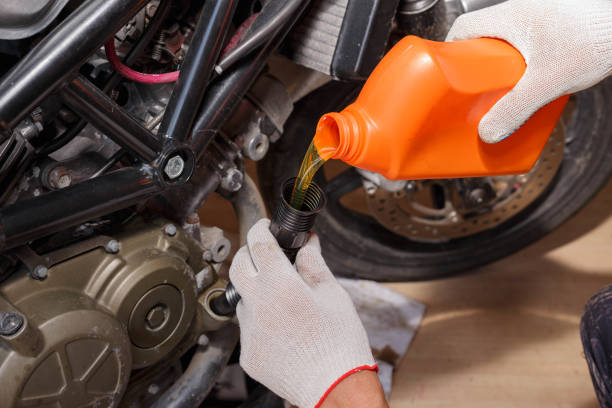
If you’re an experienced rider or just starting out, the question of “how often should I change my motorcycle oil” is a frequent one. Changing your motorcycle's oil is just as essential as changing the oil of your automobile. But lets face it, life gets busy and it’s very easy to forget something like changing your oil! However, the performance and longevity of your motorcycle depends on it.
Frequent oil changes assist in the cleaning and lubrication of your motorcycle's critical internal components, which helps protect it from wear and strain. Our team at KingsMotorcycleFairings.com wants to emphasize the importance of consulting your owner's handbook before changing or adding oil to your motorcycle. Also, if you're not confident in changing your motorcycle oil yourself, please bring it into a professional shop for servicing.
Ok, so just how often should you change your motorcycle oil?
When answering this question there are many different factors that should be considered...
- What type of oil does your bike take?
- How often do you ride?
- Are you riding at fast speeds?
The type of oil your bike needs plays a major role in determining how often it will need to be changed.
- If you use Synthetic oil, it should be replaced every 7,000 to 10,000 miles, or at the very least once a year.
- If you use Semi-synthetic oil, it should be replaced every 5,000 to 6,000 miles, or at the very least once a year.
- If you use Mineral oil, it should be replaced every 2,000 to 3,000 miles, or at least once a year. Some experts may recommend a minimum of twice a year.
If you feel your motorcycle is not running/performing as smoothly as it had previously (while not yet riding above the recommended miles for an oil change), then we strongly recommend you check the integrity of the oil to determine if it is dirty oil or simply low in volume.
Another important thing to note is that you may need to replace your motorcycle oil more frequently if you are not regularly driving your motorcycle. Whether you're driving a Honda, Suzuki, Kawasaki, Yamaha, Aprilia, Triumph, BMW, Ducati or similar, then your motorcycle needs to be regularly driven (not idling) to help burn off excess moisture that has been accumulated by the oil to help prevent oil degradation and oil corrosion. If you are unable to ride your motorcycle for more than 30 minutes each week, it is recommended that you change the oil every 4 months.
The team here at KingsMotorcycleFairings.com hope that you found this article helpful. If you have extra time, we’d love for you to visit our online store for the largest selection of Motorcycle Fairing Kits, Helmets, Gear & Accessories!
-
Ever Stall Your Motorcycle? Here’s How to Launch Like a Pro!
The team here at KingsMotorcycleFairings.com wants to take a moment to share a few pro tips on how to execute a successful launch and help ensure you can avoid the public embarrassment of a stall again in the future!